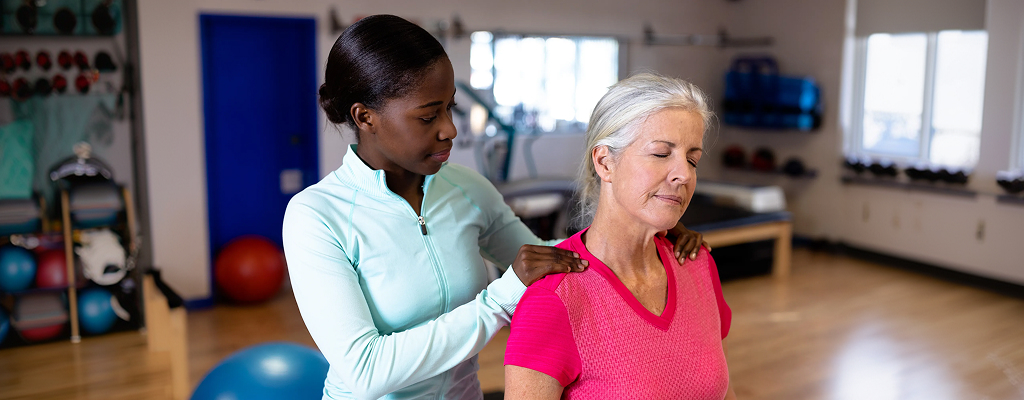
Does stress cause neck pain? The short answer is no! At Odyssey Health Care, we like to say “contributes to” instead of “causes.” The casual way healthcare professionals throw around terms can lead to confusion and, worse still, ineffective treatment. Fortunately, our highly skilled therapists know how to dig deep and find the root cause of your neck pain, and this information helps you find relief!
Let’s discuss Nicole, a 40-something-year-old working mother of three. Nicole was used to being very active, balancing her work schedule with getting her kids to all the various activities and school functions that come with being a mom nowadays.
Her neck pain first started as a crick in the neck when she woke up one morning. As the day progressed from driving her kids around to sitting at her desk, she noticed that turning her head became more difficult and painful, making focusing on work nearly impossible.
Nicole struggled to figure out why her neck started hurting and came to the conclusion that stress “must be” the culprit. The more pain and difficulty moving she had, the more convinced she was that stress was to blame.
Understanding Nicole’s Neck Pain
One of the most common things we hear from our patients is that their pain started for “no apparent reason.” Like Nicole, people will wake up with a crick in their neck or notice a stiffness turning when driving in the car. It is also common for people to notice tightness in their upper back and neck after a long day.
So, what is actually the source of the pain? In most cases, there is an issue with the neck joints or the neck muscles due to prolonged positions. Our neck joints don’t like remaining in any position for extended periods. In Nicole’s case, she first noticed her pain in the morning, which may have been related to her neck position while sleeping. It is also important to note that in Nicole’s case, the first sign of any issue was in the morning when she woke up, unrelated to stress.
As Nicole’s day progressed, her pain got worse. But this also was more likely related to how she held her neck while driving or sitting at her computer. In both cases, her posture, specifically how she held her neck, seems to have contributed to her pain. Prolonged sitting can lead to a forward head position, resulting in tension to soft tissue (i.e., muscles, tendons, and ligaments) or negative changes to our blood flow.
The muscles of our neck function best when we move them. So, holding her head in one position likely led to irritation of the muscles and affected her ability to move her neck, which in turn caused stress.
Stress “contributes” to neck pain because, when we experience stress, our bodies naturally respond by tensing up as a protective measure. This tension can lead to discomfort, particularly in the neck and upper back region. Research studies have found that individuals with higher stress levels reported increased neck pain as compared to those with lower stress levels. This is why we say “contributes” to, but not the cause of, neck pain.

Exercise of the Month
Neck Glide
(Neck)
Stand tall with your shoulders relaxed and your head in a neutral position. Gently draw your head straight backward, keeping your chin level—like you’re trying to make a double chin. Avoid tilting your head up or down. Hold briefly, then return to the starting position.
3 Sets, 10 Reps
How Physical Therapy Can Help Alleviate Neck Pain
We will target the source of your pain by performing a thorough examination, starting with your medical history and details about how, when, and where your symptoms began. As we saw with Nicole, determining how, when, and why the pain started helps us eliminate possibilities and get to the actual root cause(s).
Our therapists will also analyze your posture and movement to identify any limitations or restrictions contributing to your condition. We’ll use this information to design a program that addresses your specific needs.
Our treatment plans focus on relieving your pain and improving your posture, mobility, strength, etc., and educating you about managing your symptoms. Your program will likely include manual therapy (i.e., soft tissue work and/or joint mobilizations), targeted stretches, exercises, activity modification, or posture recommendations.
We’ll listen to your unique situation and specific issues and then work to help you find relief and get back to your normal routine.
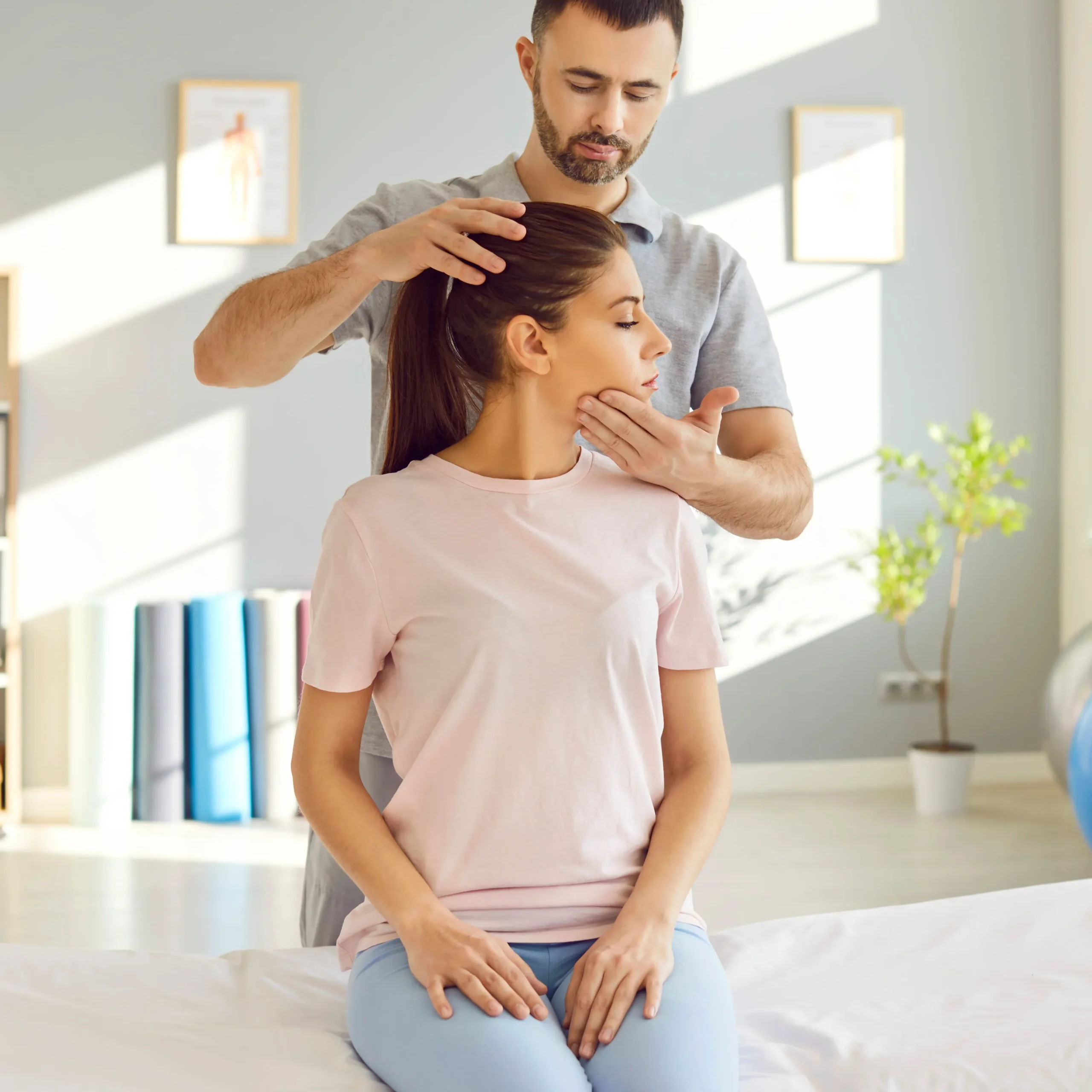
Ergonomics for Neck and Back Pain
A few simple strategies can make a big difference in preventing and alleviating neck and back pain. These strategies are part of a field of study known as ergonomics, which seeks to optimize the spaces in which humans live and work for both comfort and productivity.
Here are some PT-approved ergonomic tips for promoting good postural awareness and reducing strain on the muscles that support your spine:
Adjust Your Workspace
- Ensure that your desk, chair, and computer monitor are ergonomically aligned. Your computer screen should be at eye level to avoid straining your neck by looking up or down. Use an adjustable chair with good lumbar support to maintain a neutral spine position.
Use Proper Lifting Techniques
- Never lift a heavy item above your shoulders or twist your upper body. It’s also important to keep your feet shoulder-width apart with your head up and in line with your shoulders and back.
Take Frequent Breaks
- Incorporate regular breaks into your routine to stand up, stretch, and move around. Prolonged sitting can contribute to back pain, so aim to stand or walk for a few minutes every hour to relieve pressure on your spine.
Maintain Good Posture
- Whether sitting, standing, or moving, maintain proper posture by keeping your shoulders relaxed, spine aligned, and feet flat on the floor.
Looking for more ergonomic tips? Schedule an appointment at Odyssey Health Care!
Quick Grilled Lemon-Herb Chicken Kebabs
Ingredients
- 1.5 lbs chicken breast, cubed
- 2 zucchini, 1 red bell pepper, 1 red onion (all chopped into chunks)
- Marinade: 1/2 cup olive oil, 1/4 cup lemon juice, 2 minced garlic cloves, 1 tbsp each fresh oregano & parsley, salt & pepper.
- Skewers (soak if wooden)
Instructions
- Marinate: Whisk the marinade ingredients together. Set aside 1/4 cup for serving. Toss the chicken in the remaining marinade and refrigerate for 30 minutes.
- Assemble: Thread the chicken and chopped vegetables alternately onto the skewers.
- Grill: Cook on a grill or grill pan over medium-high heat (400°F) for 12–15 minutes, turning occasionally, until the chicken is cooked through.
- Serve: Drizzle the hot kebabs with the reserved 1/4 cup of marinade and serve immediately.

Book Your Appointment Today!
If you’re dealing with neck pain or looking for someone to help you figure out what is causing your issues, call us today and set up a consultation!
Sources
https://www.sciencedirect.com/science/article/pii/S1836955320301417?via%3Dihub, https://pubmed.ncbi.nlm.nih.gov/36180150/, https://www.ncbi.nlm.nih.gov/pmc/articles/PMC2270377/, https://pubmed.ncbi.nlm.nih.gov/28972599/, https://www.physio-pedia.com/Ergonomics, https://www.osha.com/blog/proper-lifting-techniques